
Is AI Going to Steal Our Jobs? An Honest Look at the Future of Digital Marketing
Introduction
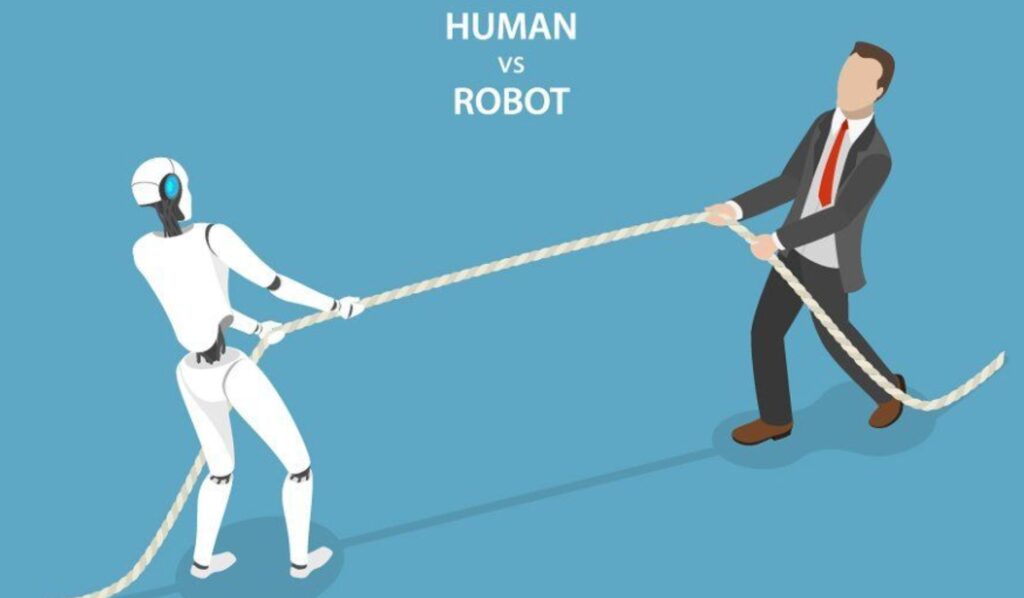
Artificial Intelligence is no longer just a futuristic idea people talk about in tech conferences. It’s already part of our everyday lives. From the ads we see online to the recommendations we get on social media, AI is quietly shaping the way businesses communicate with customers. In the world of digital marketing, the rise of AI has been especially fast. Tools can now write captions, generate blog posts, analyze customer behavior, create ad campaigns, and even automate customer support. Naturally, this has led to one big question thatmany marketers, business owners, and even students are asking right now: Is AI going to steal our jobs?
Honestly, the answer is not as dramatic as people make it sound online. AI is definitely changing digital marketing, but that doesn’t automatically mean human marketers are becoming useless. What’s really happening is that the industry is evolving. The way we work is changing, and the skills businesses value are changing too.
Content
One of the biggest advantages of AI is speed. Tasks that once took hours can now be completed in minutes. A marketer can use AI tools to generate content ideas, create multiple ad variations, analyze campaign performance, or research keywords much faster than before. For businesses, especially small and growing businesses in Qatar, this can save a huge amount of time and money. Instead of spending days on repetitive work, marketers can focus more on strategy, creativity, and improving results. AI has made digital marketing more efficient, and there’s no denying that.
Another major advantage is data analysis. Modern marketing depends heavily on understanding customer behavior, and AI is extremely good at processing large amounts of information quickly. It can identify patterns, track user interests, predict buying behavior, and help businesses make smarter decisions. Platforms like Google Ads and Meta Ads already rely heavily on AI to optimize campaigns and improve targeting. This helps businesses reach the right audience more effectively while reducing wasted advertising spend. In competitive markets, this kind of technology can make a real difference.
AI is also transforming SEO. Search engines are becoming smarter every year, and AI-powered SEO tools are helping marketers adapt. Businesses can now use AI to identify trending keywords, optimize content structure, improve readability, and understand what users are actually searching for online. For brands trying to increase their online visibility in Qatar, this is incredibly valuable. Good SEO is no longer just about stuffing keywords into a page. It’s about creating useful, relevant content that genuinely helps people, and AI can support that process.
But despite all these advantages, AI also has clear disadvantages, and this is where the conversation becomes more realistic. One of the biggest concerns is job displacement. Some repetitive tasks are already becoming automated. Basic content writing, simple customer support, and routine reporting are no longer as dependent on human effort as they once were. This naturally creates anxiety for people entering the marketing industry. While AI may not replace digital marketers entirely, it will absolutely replace certain types of repetitive work. The industry is moving toward marketers who can think strategically, solve problems creatively, and understand human behavior beyond what automation can do.
Another issue is that AI-generated content often lacks personality and emotional depth. You’ve probably noticed this yourself while browsing online. A lot of AI-written articles sound polished at first, but after a while they begin to feel repetitive and generic. That’s because good marketing is not just about producing words quickly. It’s about storytelling, emotion, trust, humor, and human connection. AI can imitate writing patterns, but it still struggles to create content that feels deeply authentic. Especially in culturally diverse markets like Qatar, understanding local audiences and communicating naturally still requires a human touch.
There’s also the risk of overdependence on automation. When businesses rely too heavily on AI tools, marketing can start to feel identical across different brands. Everyone begins using similar templates, similar headlines, and the same predictable style of communication. Creativity suffers when originality disappears. Strong brands stand out because they have personality, perspective, and emotional connection. Those qualities are difficult to automate completely.
Conclusion
Privacy and ethical concerns are another growing issue. AI systems collect and analyze huge amounts of data, which raises important questions about user privacy, security, and misinformation. As AI continues developing, businesses will need to be more careful about how customer data is handled and how automated content is used responsibly. Technology is advancing quickly, but ethical discussions around AI are still catching up.
So, is AI going to steal our jobs? Probably not in the way people fear. AI is more likely to change jobs rather than completely eliminate them. In digital marketing, the future will likely belong to people who know how to combine human creativity with AI-powered efficiency. Marketers who adapt, learn new tools, and focus on strategic thinking will continue to stay valuable. AI can automate tasks, but it cannot fully replace emotional intelligence, creativity, cultural understanding, and genuine human connection.
At the end of the day, marketing has always been about understanding people. Technology changes. Platforms evolve. Algorithms get smarter. But human emotions remain the center of every successful brand and campaign. AI may become one of the most powerful tools marketers have ever used, but it still works best when guided by human ideas, human creativity, and human understanding.
For businesses in Qatar and around the world, the smartest approach is not choosing between humans and AI. It’s learning how to make both work together.